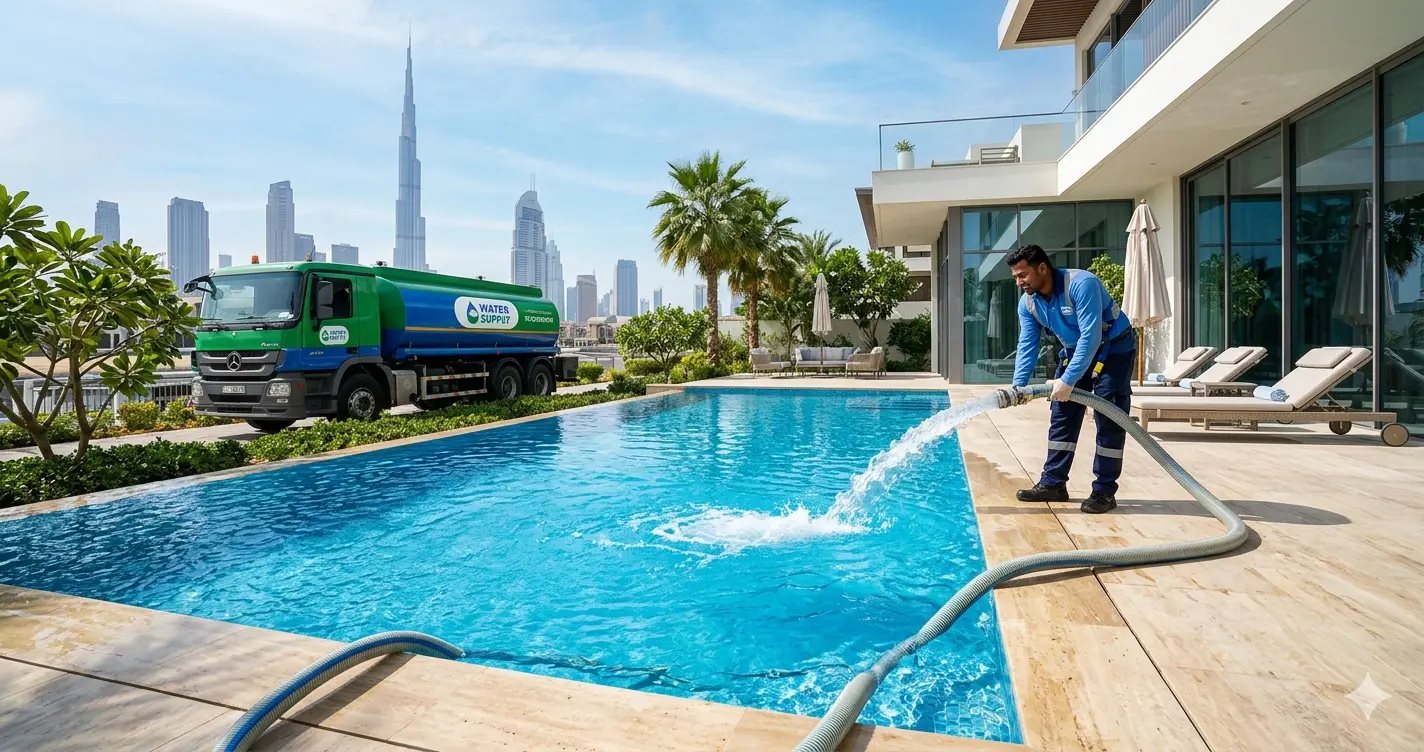
How Often Should You Refill Pool Water?
Featured Snippet Answer:
In the UAE climate, most swimming pools require partial refilling every 2–4 weeks due to evaporation and water balance loss, while a complete drain and refill is typically needed every 2–5 years depending on TDS levels, chemical buildup, and municipality compliance standards. As a water operations manager handling tanker dispatch across Dubai, Sharjah, Ajman, Umm Al Quwain, Ras Al Khaimah, and Hatta, I can confidently say: pool water refill frequency is not guesswork. It is determined by evaporation rates, Total Dissolved Solids (TDS), chemical saturation, filtration efficiency, and municipal compliance guidelines.
Understanding Pool Water Loss in UAE Conditions
The UAE’s climate is one of the harshest environments for maintaining balanced pool water. Summer temperatures regularly exceed 45°C. Evaporation rates increase dramatically, especially in coastal cities like Dubai and Ras Al Khaimah. On average:
- A residential villa pool loses 3–5% water weekly in peak summer
- Outdoor commercial pools lose up to 7% weekly
- Wind exposure increases surface evaporation
- Heated pools lose more water than non-heated pools
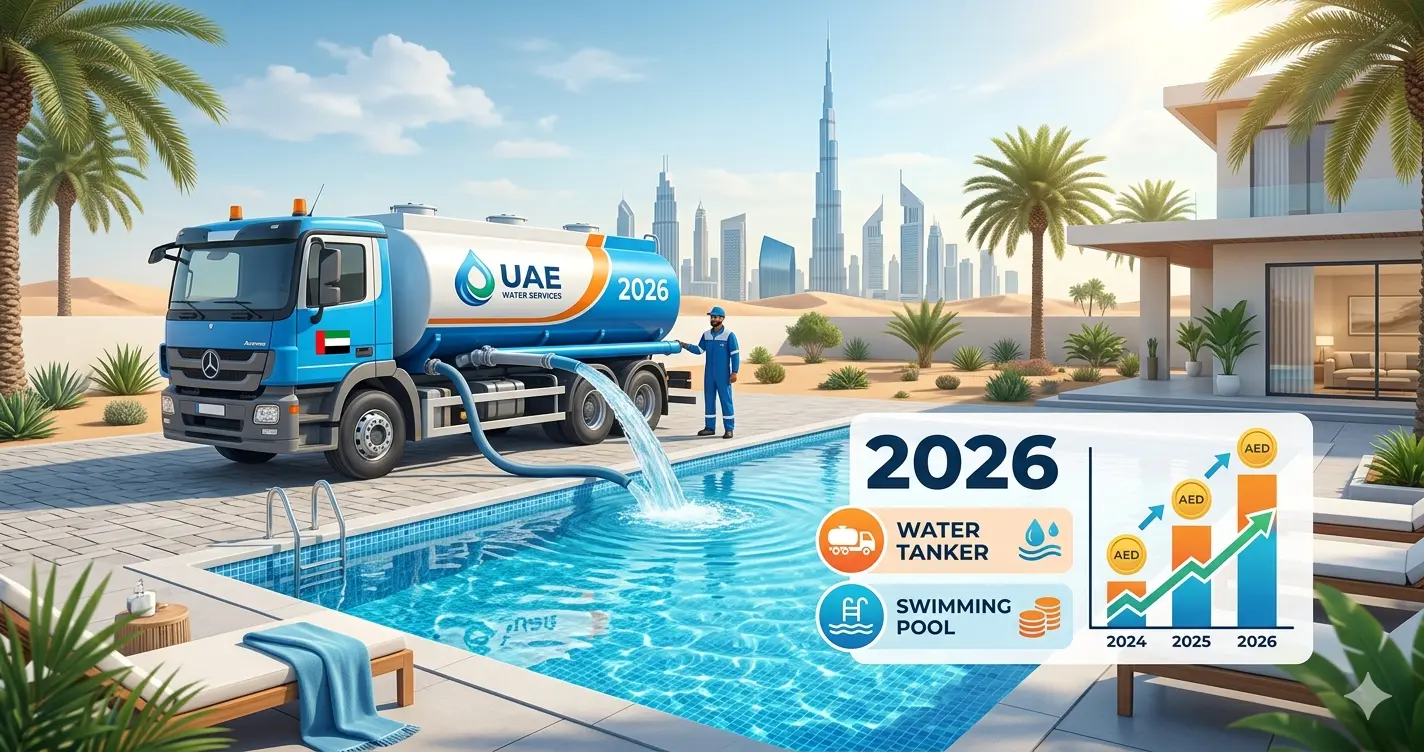
This is why many property owners rely on professional swimming pool water delivery services instead of using inconsistent borewell or unverified sources.Evaporation alone does not mean you drain the entire pool. It simply means scheduled top-ups are required.
Partial Refill vs Complete Drain: What’s the Difference?
Top-Up Refill (Every 2–4 Weeks)
Done to replace water lost from evaporation. Keeps the water level above the skimmer and protects the pump. Ideal for villas and private pools in Dubai and Sharjah.
25–50% Dilution (Every 6–12 Months)
Used when TDS and chemical buildup increase. Part of the water is replaced to restore balance without fully draining the pool. Suitable for residential and commercial pools.
Full Drain & Refill (Every 2–5 Years)
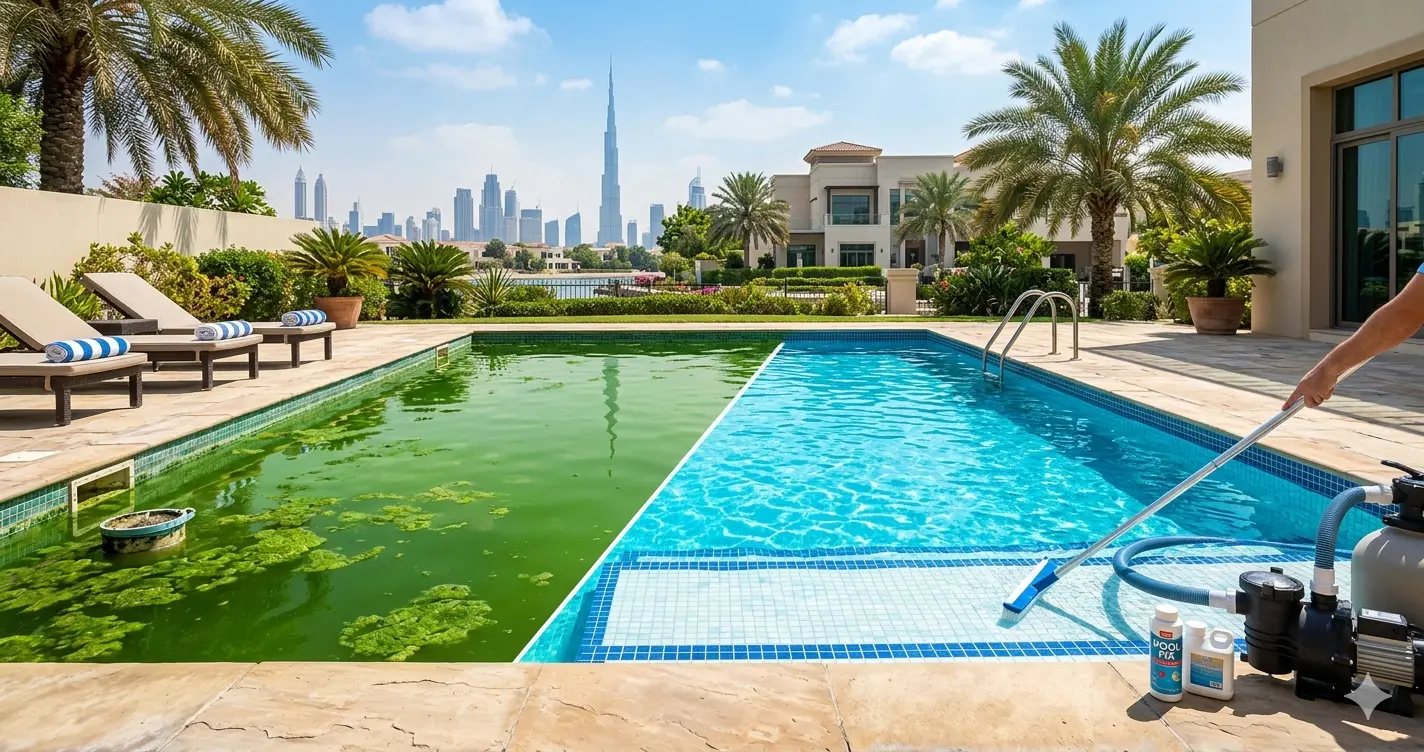
Required only when water chemistry is beyond correction, algae persists, or scaling is severe. More common in older or poorly maintained pools.equired when water chemistry becomes irreversibly imbalanced.
The Real Factor: Total Dissolved Solids (TDS)
TDS is the main indicator determining when pool water needs dilution or full replacement. Every time chemicals are added chlorine, algaecide, stabilizers dissolved solids accumulate. Evaporation leaves these solids behind, increasing concentration. In the UAE: Ideal TDS: Below 1,500 ppm , Warning Level: 2,000–2,500 ppm and Drain Required: 3,000+ ppm. Municipality inspectors in Dubai and Abu Dhabi check TDS levels during commercial pool inspections.
Our tankers supplying swimming pool water are filled only from approved sweet water stations that comply with potable standards and safe mineral content.If you are unsure about your pool’s TDS level, refer to professional guidance on how to test water quality at home.
Evaporation Rates by Emirate
While climate is similar, coastal humidity levels vary.
Dubai & Sharjah: Higher humidity but strong sunlight , Ajman: Similar to Sharjah with moderate evaporation , Umm Al Quwain: Wind exposure increases surface loss , Ras Al Khaimah: Mountain breeze in some areas accelerates evaporation and Hatta: Slightly cooler but still high summer lossMany property managers in Northern Emirates schedule tanker supply from our sweet water supply division every 3 weeks during peak months.
When Should You Completely Drain a Pool?
A full drain is not routine maintenance. It becomes necessary when:
- Persistent algae despite chemical shock
- Severe calcium scaling
- TDS exceeds safe thresholds
- Water discoloration remains after filtration
- Major pool resurfacing work
In such cases, controlled drainage must follow municipality regulations. Wastewater disposal must comply with guidelines outlined in waste water removal services in Dubai to avoid fines. Improper drainage into stormwater systems can result in penalties.
Why Municipality-Approved Water Matters
Not all water sources are equal. Using untreated borewell water can introduce: High salinity , Excess minerals , Contaminants & Bacterial risk. Our fleet sources only municipality-approved potable water as detailed in potable water delivery in Dubai standards. Water undergoes: Chlorination control , TDS testing , Tank sanitation verification and Temperature management during transport. You can learn more about sourcing transparency from our overview of where Dubai gets its water.
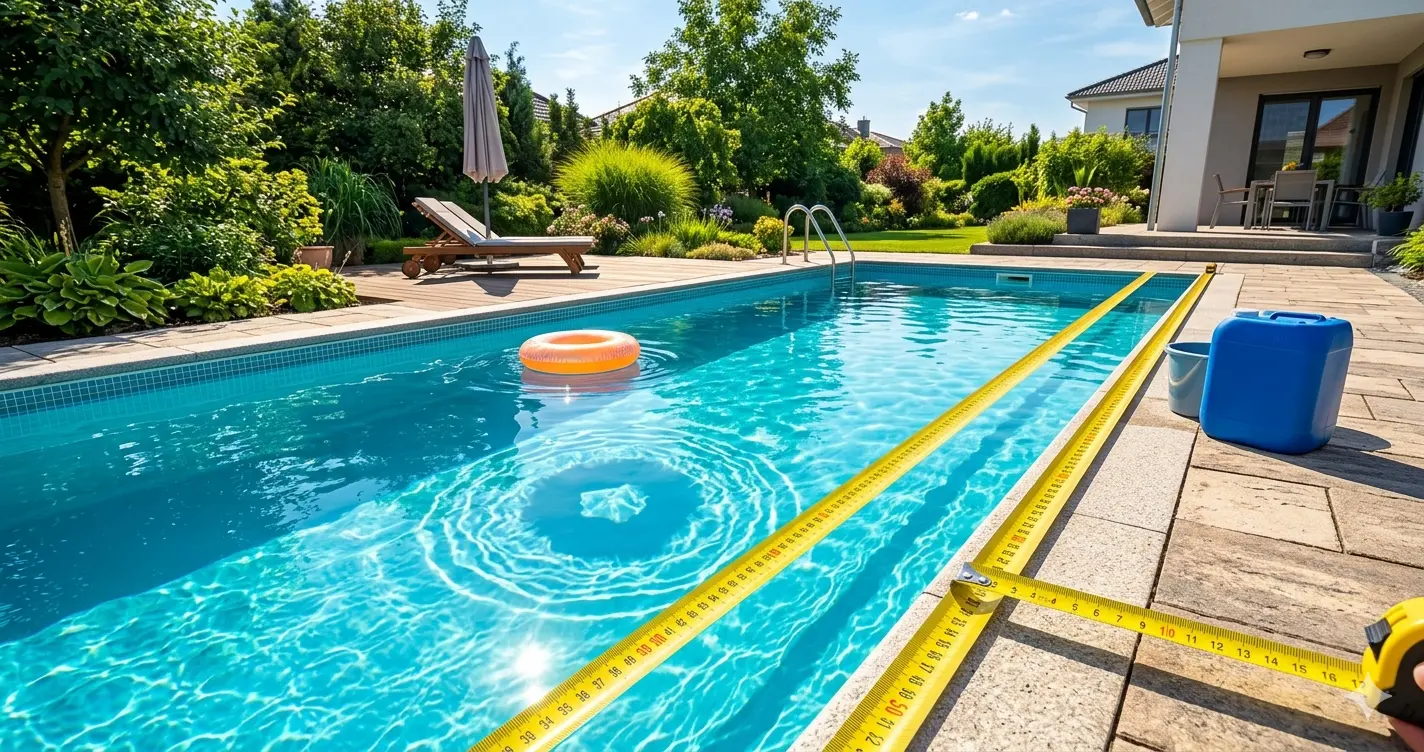
How Much Water Does a Pool Actually Need?
Many clients underestimate pool capacity. Before scheduling a refill, calculate your volume using the guidance provided in how much water does a pool hold. Typical UAE villa pools: Small: 10,000–15,000 gallons , Medium: 20,000–25,000 gallons and Large luxury: 30,000–50,000 gallons . Our tanker fleet ranges from 1,000 to 10,000+ gallons per truck. Larger commercial facilities often require multi-trip dispatch coordination through our tanker water delivery UAE operations team.
Saltwater Pools: Do They Require Refilling?
Yes and sometimes more carefully. Saltwater pools still experience evaporation. However, salt concentration increases as water evaporates. Owners often rely on salt water tanker services for controlled mineral balancing rather than standard sweet water dilution. If your system requires controlled salinity, consult professional advice outlined in how salt water delivery works before refilling.
Seasonal Refill Planning
Professional facilities in Dubai and AbuSeasonal Refill Schedule (Dubai & Abu Dhabi)
Summer (May–September)
During peak heat, evaporation increases significantly. Most pools require a top-up every 2–3 weeks. TDS levels should be tested monthly, and filters cleaned every two weeks to maintain circulation efficiency.
Winter (October–April)
Evaporation slows in cooler months. Refills are usually needed every 4–6 weeks, with TDS testing done quarterly. Preventive monitoring remains important even when water loss appears minimal. For high-occupancy villas and holiday rentals, water demand can rise unexpectedly. In such cases, rapid dispatch through emergency water supply in Dubai prevents operational downtime and guest disruption.
How to Know It’s Time for a Refill
Refill should not be delayed if you notice water dropping below the skimmer level, the pump drawing air, rising chlorine demand, cloudy water, swimmer irritation, or visible tile scaling. These are early operational warnings that dilution or top-up is required. Rather than relying on unverified vendors, many property owners now source licensed operators through trusted water tanker near me platforms. Before confirming supply, reviewing professional standards outlined in how to choose right water tanker supplier helps avoid quality and compliance risks.
The Risk of Delaying Refill
Ignoring refill requirements can result in pump damage, reduced filtration efficiency, chemical imbalance, and higher long-term maintenance costs. For commercial facilities, non-compliance with pool water quality standards in the UAE may lead to inspection notices or temporary closure orders.
Villa Owners vs Commercial Properties
Villa pool owners typically require smaller refill quantities and can use dedicated villa water supply services. Hotels, gyms, and schools require scheduled contracts under swimming pool water filling in Dubai operations. Expansion projects in Abu Dhabi are often coordinated through reliable water tanker services in Abu Dhabi for cross-emirate supply.
Approved Tanker Operations & Compliance
Professional refill services must include: Municipality-approved filling stations , GPS-tracked fleet , Licensed heavy vehicle drivers , Route permits for inter-emirate transport , Tank sanitation logs, Chlorine residual checks and Capacity options from 1,000–10,000 gallons. Companies operating as a reliable water tanker supplier in UAE follow strict transport and hygiene protocols to protect end users.
Cost Considerations
Pool refill cost depends on:
- Distance from filling station
- Quantity required
- Emergency vs scheduled dispatch
- Emirate location
To estimate your expense, review market benchmarks in how much does a water tanker cost in Dubai. Booking in advance reduces peak-season surcharges. Many clients now prefer digital scheduling via book water tanker online platforms.
Operational Recommendation
For most UAE residential pools:
- Inspect water level weekly
- Test TDS monthly
- Schedule refill every 2–4 weeks in summer
- Plan partial dilution annually
- Consider full drain only when necessary
If unsure, consult professional guidance from experts specializing in water for swimming pool UAE requirements.
Frequently Asked Questions
1. Can I refill my pool with tap water?
Yes, but it must meet potable standards. Professional tanker supply ensures compliance and consistent mineral balance.
2. How long does a pool refill take?
A standard 5,000–10,000 gallon delivery typically completes within 45–90 minutes depending on access and hose routing.
3. Is borewell water safe for pools?
Not recommended without testing. High salinity and mineral content can damage tiles and equipment.
4. How do I reduce evaporation?
Install pool covers and reduce heating temperature.
5. What happens if TDS gets too high?
Water becomes difficult to balance and may require dilution or full replacement.
6. Do saltwater pools need sweet water refills?
Yes, for evaporation compensation and controlled dilution.
Call to Action
If your pool water level is dropping or TDS levels are rising, schedule a professional inspection today.Ensure your next refill is: Municipality compliant ,Tested for TDS & chlorination ,Delivered by licensed drivers and Dispatched from approved filling stations
Contact a certified water operations team to maintain safe and balanced pool water across Dubai, Sharjah, Ajman, Umm Al Quwain, Ras Al Khaimah, and Hatta.